Gaming
Gaming is the largest single category of entertainment by revenue - bigger than film and recorded music combined. The industry spans console and PC publishers, mobile free-to-play studios, live-service and platform games (Fortnite, Roblox, Minecraft and Genshin Impact), the platforms themselves (Steam, Epic Games Store, PlayStation, Xbox and Nintendo), middleware and engines (Unity, Unreal and CRYENGINE), and the in-game economies that monetise via cosmetics, season passes and battle passes. The post-2022 correction reset most public gaming equities; consolidation accelerated with Microsoft's $69B Activision Blizzard acquisition (2023) and continues through Embracer's restructuring.
It spans console and PC AAA publishers, mobile and free-to-play studios, live-service and platform games, gaming platforms and storefronts, game engines and middleware, esports and competitive gaming, gaming livestreaming, and emerging categories like cloud and AR/VR gaming.
Revenue comes from full-game sales, in-app purchases on free-to-play titles, season-pass and battle-pass subscriptions, subscription services (Xbox Game Pass, PlayStation Plus, Nintendo Switch Online), platform take rate on game sales (typically 30% at first-party storefronts), licensing of IP into adjacent media, and advertising on mobile free-to-play and hyper-casual titles.
Gaming is part of Consumer internet.
$183B
Global market size
288
Public companies
Key VC investors
 TimberWolf
Key strategic buyers
How gaming companies monetize?
Gaming companies monetize through full-game sales, free-to-play in-app purchases and battle and season passes.
Full-game sales
Pay-once unlocks for AAA console and PC titles. Standard for Take-Two, EA Sports and Nintendo first-party titles; price points $40-70 at launch with extensive discounting over the life cycle.
Free-to-play with in-app purchases
Free download monetised through cosmetics, characters and gameplay items. The dominant mobile model and the model behind Fortnite, Genshin Impact, Free Fire and Roblox.
Subscriptions
Library and online-play subscriptions. Xbox Game Pass, PlayStation Plus, Nintendo Switch Online and EA Play anchor the platform side; mobile equivalents (Apple Arcade, Netflix Games) sit at the consumer tier.
Battle and season passes
Time-limited content tracks priced at $5-15. Used heavily in live-service titles (Fortnite, Call of Duty, Apex Legends, Valorant); now the engagement model for most major free-to-play games.
Platform take rate
First-party stores take 30% on third-party game sales (PlayStation, Xbox, Nintendo eShop, Steam). The Epic Games Store charges 12% and helped force Steam to introduce tiered rates.
Advertising and licensing
In-game ads on mobile hyper-casual titles plus broader IP licensing into film, TV and toys. AppLovin (NASDAQ: APP) and ironSource (Unity) anchor mobile ad monetisation; IP licensing has scaled with Mario, Sonic, Fallout and The Last of Us adaptations.
Gaming valuations in May 2026
Public gaming comps trade at 2.1x EV/Revenue. Median revenue multiple across gaming M&A deals was 2.1x in the last 12 months. Median revenue multiple across gaming VC rounds was 11x in the last 12 months.
2.1x
Median EV/Revenue as of May 2026 for public gaming companies
11x
Microsoft is the highest valued public gaming company based on EV/Revenue (excluding outliers)
2.1x
Median EV/Revenue across gaming M&A deals in the last 12 months
11x
Median EV/Revenue across gaming VC rounds in the last 12 months
Gaming market segments
Gaming spans console and PC AAA publishers, mobile free-to-play studios and live-service platform games.
Console and PC AAA publishers
Large publishers releasing AAA titles on consoles and PC. Activision Blizzard (Microsoft, $69B in 2023), EA (NASDAQ: EA), Take-Two (NASDAQ: TTWO), Ubisoft (PAR: UBI) and Capcom (TYO: 9697) anchor the segment.
Mobile and free-to-play studios
Free-to-play mobile and PC titles. Tencent (HKEX: 0700) and NetEase (NASDAQ: NTES) lead globally; HoYoverse (Genshin Impact, Honkai), MiHoYo, Krafton (KRX: 259960, PUBG) and Scopely anchor the mid- to top-tier.
Live-service and platform games
Persistent live-service experiences with millions of concurrent users. Fortnite and Rocket League (Epic Games), Roblox (NYSE: RBLX), Minecraft (Microsoft), Valorant and League of Legends (Riot/Tencent), Genshin Impact (HoYoverse).
Gaming platforms and storefronts
First-party platforms and third-party storefronts. Sony PlayStation, Microsoft Xbox and Nintendo on console; Valve Steam, Epic Games Store, GOG and itch.io on PC; App Store and Google Play on mobile.
Game engines and middleware
Software powering game development. Unreal Engine (Epic Games) and Unity (NYSE: U) are the leading commercial engines; CRYENGINE, Godot (open-source) and proprietary engines (id Tech, Frostbite, RAGE) compete in niches.
Esports and competitive gaming
Competitive gaming leagues, teams and tournaments. Riot's League of Legends Championship Series, Activision's Call of Duty League, ESL FACEIT (Saudi PIF) and the Esports World Cup anchor the category.
Game livestreaming
Platforms for gaming livestreams and creator content. Twitch (Amazon), YouTube Gaming, Kick (Stake) and Trovo run the global side; Huya (NYSE: HUYA) and Douyu (NASDAQ: DOYU) lead China.
Cloud and AR/VR gaming
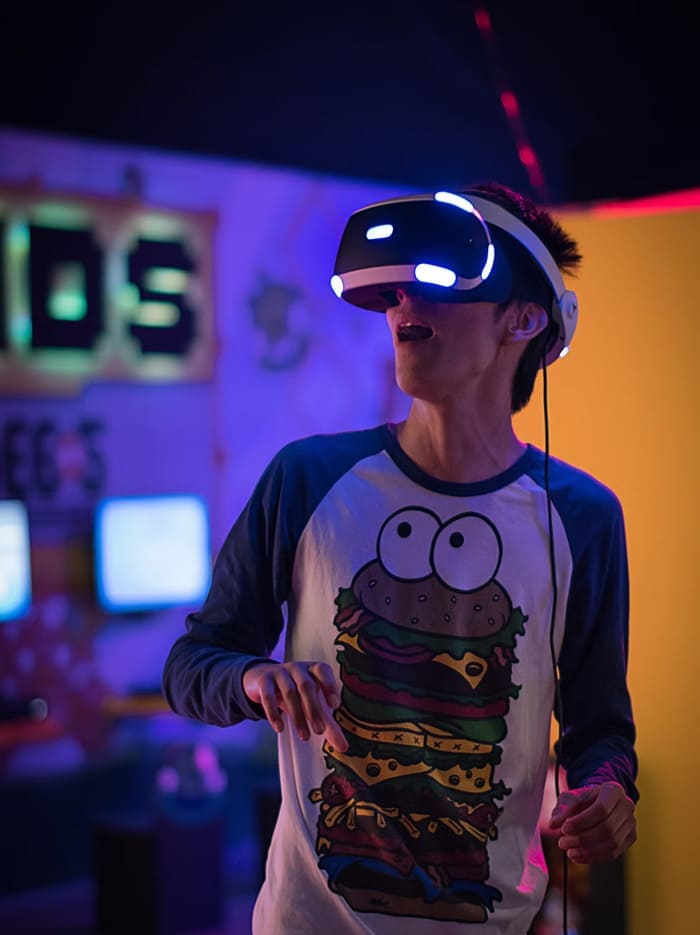
Streaming-based and immersive gaming categories. Microsoft Cloud Gaming, NVIDIA GeForce Now, Sony Cloud and Boosteroid run cloud; Meta Quest, Sony PSVR2 and Valve Index lead VR.
Fractional CFO, financial modelling and deal advice for gaming companies
See how Flow helps gaming founders.
We speak founders' language and have great operational understanding of gaming businesses.
Book an intro call - we'll look under the hood and recommend concrete next steps.
Fractional CFO
For founders who want to improve their FP&A functions, build an investor-ready financial model, and prepare for the next VC round.

Capital raising
For bootstrapped and already-VC-backed entrepreneurs who are looking to raise late stage venture or growth capital.

M&A
For category-leading technology companies who are exploring exit alternatives with either financial or strategic acquirers.

Key gaming KPIs to track
MAU, DAU, ARPU, bookings and retention curves are the metrics investors track in gaming.
| KPI | Definition |
|---|---|
| Monthly active users (MAU) | Monthly players across titles. The headline scale metric at Roblox (80M+ DAUs), Fortnite (200M+ MAUs at peak), Minecraft and the major live-service titles. |
| Daily active users (DAU) | DAU is the deeper engagement metric on live-service titles. The DAU/MAU ratio (stickiness) is the standard quality read; healthy live-service titles run 25-40%. |
| ARPU and ARPPU | Average revenue per user (and per paying user). Mobile free-to-play ARPDAU is the standard metric; whale-driven games (Genshin Impact, Honor of Kings, Diablo Immortal) skew ARPPU much higher than the median. |
| Bookings and net bookings | Total spend on virtual goods and content in the period (not the deferred recognised revenue). Standard headline metric at Take-Two, Activision, EA and Roblox. |
| Engagement hours | Total hours played per user or per month. Roblox discloses hours engaged (16B+/quarter); Steam Charts and Apptopia provide third-party measurement. |
| Retention curves (D1, D7, D30) | Share of new players still active after 1, 7 and 30 days. The standard quality read for mobile and free-to-play; D30 above 10-15% considered strong. |
| Live-service revenue mix | Share of revenue from in-game purchases versus upfront sales. Activision-EA-Take-Two have shifted heavily toward live-service; the trend is the principal multiple-expansion narrative. |
| Platform take rate | First-party platform commission on game sales. Standard is 30%; Epic Games Store at 12%; Steam scales down to 20-25% at higher revenue tiers; Apple and Google App Store at 30% (15% for small developers). |
Main gaming players globally
The most active gaming companies and category leaders globally.
| Company | HQ | Overview |
|---|---|---|
Microsoft Gaming (Activision Blizzard, Xbox) xbox.com |  Redmond Redmond | Microsoft's gaming unit (NASDAQ: MSFT). Activision Blizzard (acquired 2023, $69B), Xbox first-party studios (Bethesda, Mojang) and Game Pass anchor the largest gaming business globally. |
Tencent tencent.com |  Shenzhen Shenzhen | Largest gaming company by revenue (HKEX: 0700). Honor of Kings, Riot Games (100%), Epic Games (40%), Supercell (84.3%) and stakes in Ubisoft, Krafton and many others. |
Sony Interactive Entertainment playstation.com |  Tokyo Tokyo | Sony's gaming division (TYO: 6758). PlayStation hardware, PlayStation Plus, first-party studios (Naughty Dog, Insomniac, Bungie) and PlayStation Productions for film and TV adaptations. |
Nintendo nintendo.com | Kyoto | Console and franchise giant (TYO: 7974). Switch, Mario, Zelda, Pokemon and Animal Crossing anchor a uniquely first-party-led business; Switch successor expected 2025. |
Take-Two Interactive take2games.com | New York | Publisher of Grand Theft Auto, NBA 2K, Red Dead Redemption and (via Zynga acquisition, 2022) FarmVille and Empires & Puzzles (NASDAQ: TTWO). |
Electronic Arts (EA) ea.com | Redwood City | Sports and live-service publisher (NASDAQ: EA). EA Sports FC (formerly FIFA), Madden, The Sims, Apex Legends and Battlefield anchor the catalogue. |
Epic Games epicgames.com | Cary | Maker of Fortnite, Unreal Engine and the Epic Games Store. Private; 40% owned by Tencent, additional stake by Sony and KIRKBI; valued at $32B in 2022. |
Roblox corp.roblox.com | San Mateo | User-generated gaming platform (NYSE: RBLX). 80M+ DAUs; 70/30 economy where creators capture Robux earnings; expanding into older demographics and 17+ content. |
HoYoverse (miHoYo) hoyoverse.com | Shanghai | Free-to-play studio (private). Genshin Impact, Honkai: Star Rail and Zenless Zone Zero drive global mobile and PC revenue at the top of the category. |
Krafton krafton.com |  Seoul Seoul | Korean publisher (KRX: 259960). PUBG: Battlegrounds and PUBG Mobile (with Tencent) are the anchor titles; New State Mobile and the BGMI India relaunch round out the portfolio. |
CFO-as-a-service without the overhead
Fractional CFO services priced for startups - senior operator, no permanent headcount.
Key gaming market trends
The Microsoft-Activision close, Saudi PIF investment and AI in game development are reshaping gaming right now.
Microsoft-Activision close and Game Pass strategy
Microsoft closed the $69B Activision Blizzard acquisition in October 2023 after extended regulatory review. Call of Duty rolled into Game Pass in 2024; the subscription is now the principal Xbox revenue driver.
Mobile gaming maturity and Apple ATT impact
Apple's App Tracking Transparency reshaped mobile UA economics from 2021-2022. AppLovin's AXON ML platform has emerged as the principal beneficiary; the largest mobile publishers (Tencent, Mihoyo, Scopely) have continued to consolidate share.
Saudi PIF as the largest gaming investor
Savvy Games Group (PIF) committed $38B to gaming through 2030. Acquired ESL FACEIT (2022), Scopely (2023, $4.9B); minority stakes in Embracer, Nintendo, Activision (pre-deal), Take-Two and Capcom.
Embracer restructuring
Embracer Group split into three companies in 2024 after the $2B Savage Games deal collapsed. Coffee Stain and Asmodee spin-offs reshape the indie M&A landscape; smaller AAA studios have been the principal casualties of the cycle reset.
AI in game development
Generative AI for art, code and dialogue is rolling out across major studios. Activision, EA, Ubisoft and Take-Two have disclosed pilot programmes; SAG-AFTRA reached a video-game AI deal in 2024-2025 setting voice-actor protections.
Live-service crunch and shutdowns
Sony's Concord shutdown 2 weeks after launch (2024) marked a high-profile live-service failure. Multiple AAA live-service launches missed expectations; the cycle is rotating attention back toward proven IP and single-player experiences.
Similar verticals to gaming
Explore niches like online content, mobile apps, online betting and online dating.
Explore other sectors
We know tech inside & out.
We live and breath tech - true understanding of how startups operate is fundamental at what we do.









Recent insights across gaming and beyond




Talk to us
Schedule a call to get a health check on your business and see how we could help.
Fractional CFO
- Fractional CFO for Software
- Fractional CFO for AI & ML
- Fractional CFO for Fintech
- Fractional CFO for Consumer internet
- Fractional CFO for Digital media
- Fractional CFO for E-commerce & marketplaces
- Fractional CFO for Consumer products
- Fractional CFO for Mobility
- Fractional CFO for Digital health
- Fractional CFO for Industrial technology
- Fractional CFO for Digital infrastructure
- Fractional CFO for IT services
Stages
Countries
- UK Fractional CFO
- Ireland Fractional CFO
- France Fractional CFO
- Germany Fractional CFO
- Spain Fractional CFO
- Portugal Fractional CFO
- Italy Fractional CFO
- Netherlands Fractional CFO
- Belgium Fractional CFO
- Switzerland Fractional CFO
- Austria Fractional CFO
- Denmark Fractional CFO
- Sweden Fractional CFO
- Norway Fractional CFO
- Finland Fractional CFO
- Poland Fractional CFO
- Estonia Fractional CFO
- US Fractional CFO
- Canada Fractional CFO
- Mexico Fractional CFO
- Brazil Fractional CFO
- UAE Fractional CFO
- Australia Fractional CFO
Cities
- London Fractional CFO
- Dublin Fractional CFO
- Paris Fractional CFO
- Berlin Fractional CFO
- Madrid Fractional CFO
- Lisbon Fractional CFO
- Milan Fractional CFO
- Amsterdam Fractional CFO
- Brussels Fractional CFO
- Zurich Fractional CFO
- Vienna Fractional CFO
- Copenhagen Fractional CFO
- Stockholm Fractional CFO
- Oslo Fractional CFO
- Helsinki Fractional CFO
- Warsaw Fractional CFO
- Tallinn Fractional CFO
- New York Fractional CFO
- Toronto Fractional CFO
- Mexico City Fractional CFO
- São Paulo Fractional CFO
- Dubai Fractional CFO
- Sydney Fractional CFO